Growth Plate Injuries in Youth Climbers and the Cost of Chasing Greatness
The full version of my UKC piece. Growth plate injuries in youth climbers, why they happen, and what coaches, parents and federations can do to reduce the risk.
There are no shortcuts to greatness.
Kids today are doing things that were unthinkable a few years ago. What once looked impossible is now normal. Teenagers are climbing routes that only some of the best climbers in the world could touch not so long ago, with a swagger only they are capable of. That progression is amazing. But it comes with a cost we don't fully understand, and don't talk about nearly enough.
Unlike pulley injuries, which are extremely rare in kids, finger growth plate injuries are one of the most common climbing-specific injuries in teenage climbers. And the way modern youth climbing is evolving, that number is only going in one direction.
Now don't go reading this assuming you already knew kids weren't meant to be pushed this hard from such a young age. This article is not heading in that direction, because there is a brightness in youth that only shines like this when what they chase means everything to them.
This article is my interpretation of the current evidence I looked at, combined with my own thoughts as a professional coach and climber. My intention is not to give advice, or pretend that we can completely eliminate risk. I just want to raise this theme, and I think it is very important to clarify that even with careful planning, the best coaching, load management… kids can still get hurt. There is no completely safe path in performance climbing. My goal with this piece is to create conscience, and maybe start a conversation that will put us all on the same page, so that when we think about prevention, we can honestly say we did everything we could, while supporting youth athletes chasing their goals and dreams.
Growth Plate Injuries in Climbing
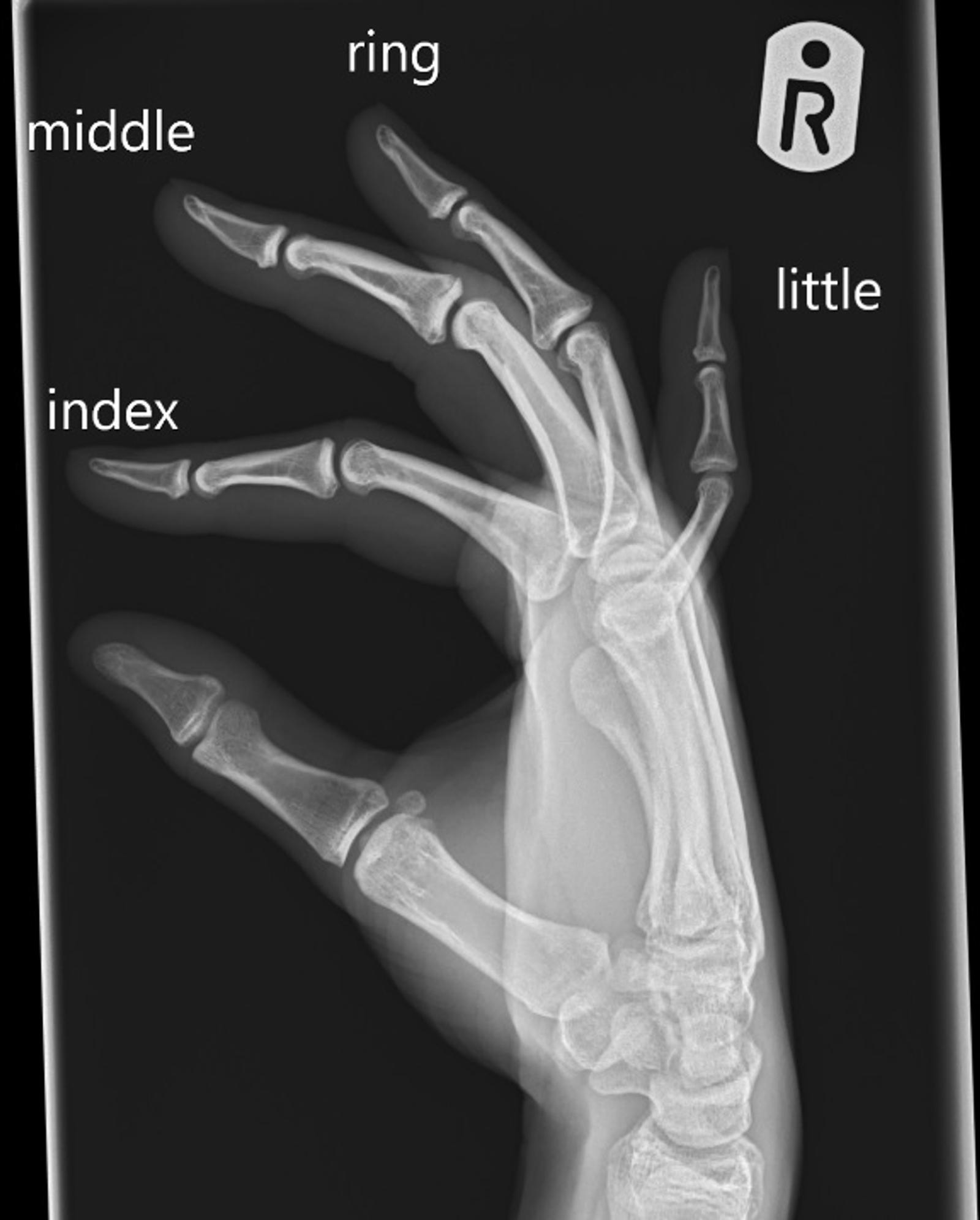
Growth plates are areas of developing cartilage found near the end of bones in children and adolescents. These regions are weaker than developed bone and tendon structures, especially during periods of growth spurts. In climbing, the fingers are exposed to very high repetitive forces, particularly while crimping and explosively pulling.
Unlike adults, whose finger injuries more commonly involve pulley injuries, tendon issues… adolescents often experience stress injuries around the growth plates of the fingers. These injuries happen most often in the "proximal interphalangeal joint area", (particularly in the middle joint).
A 2022 multicentre study by Schöffl and others described finger epiphyseal (end part of the bone) growth plate stress injuries as the "most frequent sport-specific injuries in adolescent climbers." The study looked at adolescent climbers over several years and attempted to develop a clearer diagnostic and treatment protocol for these injuries.
A 2025 scoping review by Jaini and others analysed the existing research on climbing-related growth plate injuries and found that most injuries occurred in adolescent climbers around 14 years old. The vast majority of them were on the fingers. The review also highlights that many injuries were stress fractures located near the growth plate.
Injuries to developing bones, if ignored or repeatedly overloaded, can cause long term damage including chronic pain, deformity, early growth plate closure, weakness…
Why Are These Injuries So Common?
Here is something that amazes me about ambition. It’s risky and beautiful. Young climbers feel with such an intensity that it is contagious. They throw themselves at anything, complex coordinations, massive dynos, without understanding what is too much, or fear the way we do. And that is a big part of what makes them so amazing. But it is also what makes them so vulnerable to injuries.
Modern climbing and the climbing community more and more are rewarding intensity, physical and existential. More power, more fingers, more volume, more heart…
And the further I go into coaching, the more I realise something uncomfortable: many of the organisations developing high-performing young climbers are walking a thin line between what developing bodies can and cannot tolerate. Not recklessly I'm sure, with good intentions.
This progression keeps happening at younger ages, and there should be only one way to fight such demands on our youth athletes. In order to keep them safe, we must take on greater responsibilities.
Climbing itself is not reckless for children. Kids have climbed forever. What is different now is the amount of kids that climb at a really high level, the volume, and honestly the complexity of unorthodox training methods.
It’s normal now to see youth athletes train with the structure and intensity that used to be only for elite adult climbers. Board climbing for hours and hours, coordination boulders until a complex coordination feels fluent, campus moves, fingerboarding, competition preparation, double sessions, year round schedules... These are the rule.
Then we have competitive standards going mental. And climbing becoming an Olympic sport, speeding things up even more. Young climbers now grow up seeing teenagers compete internationally and perform at levels reserved only for the very best. Of course many ambitious athletes and coaches will try to make their way up too and close this gap. And the problem is that readiness and ambition aren’t always aligned.
Training style and intensity have an influence on injury risk. A study by Meyers and others looked at the relationship between growth plate injuries and youth competition climbing, especially speed climbing. And they found associations (not proof of what caused it) between specific training characteristics and injury history.
There are also risks of repeated high force finger loading during bone development, especially when competitions, and non climbing related stress, like exams, or unstable households… come into the equation.
It is very important to bear in mind that this is still all relatively new to us. And we do not have the answers to exactly determine how much is too much, or which exercises are 100% safe in youth athletes.
The Difficult Balance Between Performance and Protection
If a really talented young climber dreams of competing or climbing at a high level, completely avoiding stress on the fingers is just unrealistic. Climbing itself adds stress on the fingers, pull-ups add stress… And if we took off every major risk factor from youth climbing, there would be no performance pathway.
The balance is probably somewhere in between. This is where I find coaching becomes morally complex, chasing high performance involves risk. That is just the reality of it. And stopping kids from chasing something they care about with that kind of intensity is its own form of neglect too. It’s hard because as coaches, or parents… we want to protect young athletes, and at the same time, we also want to support them to chase their dreams. And we are back walking on a thin line here.
I'm not the kind of coach who will ever tell a young athlete not to chase climbing with everything they have if that is truly where their heart is at. Actually, quite the opposite, I believe there is so much beauty in fully giving yourself to something you love, because there is so much to learn from dedication.
I have coached many youth rock and competition climbers. Some to the highest step of the podium at international competitions, others to compete in the World Cups, many who never really competed. And it is because of this, because I have stood so close to that fire that spreads from them, that I felt the need for this piece. I believe awareness, education, and prevention must be our first line of defence when dealing with growth plate injuries. I owe it to them, because the better they become, the better I must become too.
The answer is not to get rid of all "hard" training from youth climbers, nor pretend there is a magic recipe to take risk out of the picture disguised as perfect coaching. But I believe we have a responsibility to minimise unnecessary risk while we try to stay honest about what performance really demands.
If a kid genuinely wants to push hard in climbing, then training will eventually get serious. The question is not whether stress should exist, but whether we have a plan and can justify everything we do.
Obviously there is a difference between unnecessary and productive stress. A properly monitored progression, with progressive loading, good recovery habits, and close communication, is very different from constantly chasing to go all in every session.
Sadly, modern sports culture and climbing as well, often turns a blind eye and venerates extreme dedication without ever talking about the long-term plan or possible consequences, and rarely draw a line on what is unacceptable.
The crux here is that young climbers (not just kids) are often really motivated, and will ignore pain if they suspect a season is hanging on it. This makes our role as coaches, national government bodies, federations, parents… increasingly important.
Early Warning Signs
Growth plate injuries are often misdiagnosed or ignored early on. Pain around the middle finger joints in adolescent climbers should never automatically be dismissed as normal. And in my experience, it often is. Early in my career I missed it myself, simply because I didn't know enough about it then. Knowing this now is not a safety pill, it can still happen again. But at least now I can honestly look back and say I did everything I could.
Common warning signs described in the studies I referenced:
- Persistent pain around the finger joints during or after climbing
- Swelling around the proximal interphalangeal joint (Middle joint)
- Pain while crimping
- Lingering stiffness or tenderness
- Loss of range of movement
- Pain during normal life activities
These symptoms are something to look out for, and at no point should we consider them normal in youth athletes. It's okay to not panic straight away, but if any of these symptoms get reported pointing at a joint, we should take action immediately. Stop climbing, track the pain, wait and observe. If the pain goes completely away and there is no sign of any other symptoms, it is possible it was a false alarm. If it doesn't, get it checked professionally as soon as possible.
One of the biggest problems is that many really keen kids will push through the pain and continue climbing regardless of symptoms, because they fear "losing it all". This can be a problem because research and clinical reports repeatedly suggest that delayed diagnosis can worsen the injuries.
This is why I think education matters so much. Young climbers, parents, and coaches all need to understand that finger pain in adolescents is not something we can afford to look away from. And if in doubt, early imaging and a good assessment can make all the difference.
Can We Prevent These Injuries?
Well, prevention is hard because no strategy takes the risk out of it completely. That said, the evidence I looked at and applied with my athletes strongly suggests that careful load management is one of the keys.
But this is not an exact science either.
What should we be careful with?
I want to be careful with my words here, as at no point am I trying to say that young climbers should never crimp, never boulder hard, never do pull-ups… Climbing itself will put them through all of these sooner or later. The question, in my opinion, is not whether kids should do this, but: why are they doing it? If you don't have a straight, valid answer to that question, it might be worth stepping back, reflecting, and coming back with a clearer approach. This is something I find myself doing constantly, and in my opinion it's not proof of inexperience or lack of quality, but of flexibility and adaptability. Are we progressing responsibly? If I got a pound every time this crosses my mind I would have so many pounds, and honestly I still don't know the answer to this one, but I try to the best of my ability to do so, if your answer looks somewhat like this, I think we are on the right track. Is the reward truly worth the risk? This is definitely the one I have two answers for, and probably one of the trickiest to approach. Because whenever I had to answer this as an athlete, my answer has always been consistent: absolutely, 100% yes. And it’s exactly because of this, as a coach I've learned to answer it slightly differently. Because sometimes, it's not.
So if you have answered honestly and to the best of your ability these questions and or even more that you come up with, and have replied to them always having the wellbeing of your athletes as a priority you will probably have a pretty good idea of what you can and cannot do with them.
These are some loading patterns that I personally believe need extra caution in developing athletes:
- Repetitive crimping over time
- Unnecessary fingerboarding
- Excessive board climbing
- Campusing
- Double dynos
- Coordination moves under fatigue
- Weighted pull-ups
There is also context to some specific exercises of course.
For example, if a kid is struggling with pull-ups, there is probably no reason to begin weighting pull-ups, especially when the fingers are already being exposed to so much stress through climbing. (Yes pull-ups, add stress to your fingers)
I actually don’t think there is ever a fair justification for loading the fingers specifically past climbing or bodyweight before growth plates are confirmed to be fused. And this doesn't mean weighted pull-ups are a bad exercise. They are great tools but only within the right context.
The same thing goes for fingerboarding, when used well. It can be incredibly useful for specific rehabilitation processes, controlled loading, or specialised performance training (once fully developed). So I think it should be approached really carefully when it comes to developing youth athletes, if not totally avoided, especially when we use it as a maximal strength training tool without having a clear goal or argument that isn't simply to get stronger fingers.
And it’s tricky because you might know of kids that have fingerboarded really hard before their skeleton had fully developed, or climbed really hard routes in monos or really shallow pockets, or have consistently climbed really crimpy routes, and never got hurt, the truth is that none of these automatically guarantee injury, either.
But the cumulative stress from these sorts of training plays no favorites with talent, skill or physical traits and when combined with months of training, competitions, exam periods and delayed recovery, will significantly increase risk of injury in kids.
Personally, and for a while now, before I begin implementing any sort of fingerboarding or structured maximal finger training with developing athletes, I send them to get an X-ray and get cleared by a professional. I would rather do this than guess.
How much is too much load?
A developing athlete will probably deal pretty well with a couple of hard board sessions a week, a couple hard lead sessions a week, a big technical bouldering session here and there, a few S&C sessions on top of it too. But the problems can emerge when they start combining all this with PE lessons in school, competitions or hard projecting sessions on the rock, exams, fingerboard sessions, campusing, a tough time at home…
All of this will eventually have a dramatic effect on their recovery and ability to adapt to training. And before we extend the high volume and intensity sessions, we need to understand that our bodies don’t really care about one exercise alone, they react to cumulative stress.
This is why monitoring overall training taking into account the whole picture of each youth athlete is essential, as every kid comes with a different backpack.
Is maximal finger loading safe?
Every piece of research I looked at points towards the same conclusion. We must play it safe when it comes to hard finger-specific training in youth athletes.
This probably means that maximal fingerboarding, aggressive campusing, weighted pull-ups, or highly dynamic finger training should be approached very carefully and potentially avoided.
Who Is Actually At Risk?
Growth plate injuries mainly concern kids whose growth plates haven't fully fused yet. And my understanding is that the risk is especially relevant during growth and growth spurts, very roughly around the ages of:
- Girls: approximately 12–17 years old
- Boys: approximately 13–18 years old
But we must bear in mind that each kid is different. And biological development is not an exact science.
Some athletes develop earlier, and others later. I coached a boy recently whose growth plates were fused at the age of 15 and a different athlete whose growth plates were still fusing at the age of 17.
This is why age alone should never be treated as a definitive clearance. In reality, unless proper confirmation from an MRI, or good quality X-Ray and a specialised professional ideally experienced in treating climbers who knows what they are looking at, there is potential risk.
And I must emphasize how important it is for the specialist to be used to working with youth climbers, because growth plate injuries are really complicated, and I have heard from parents whose kids' X-rays were reported back normal, when in reality they subtly showed a stress fracture. Growth plate stress fractures outside of climbing are rare and not life threatening, so it is possible that doctors without specific experience with climbing injuries may not fully appreciate what this could mean for a climber.
Growth spurts
Some researchers suggest that periods of sudden growth may temporarily increase the risk of stress fracture. During these, coordination tends to change, recovery can be compromised, and tissue can be more sensitive to stress. In my experience, kids just get clumsy. And that clumsiness is worth keeping an eye on.
This can be a good time for us coaches to reduce excessive intensity and switch to different training and to pay particularly close attention to possible symptoms.
The Responsibility Of Coaches, Route Setters, Federations, And The Climbing Industry
I don’t think this is an athlete issue alone.
If developing athletes arrive at competitions already accumulating months and months of hard training, then these competitions are the perfect recipe for an injury like a growth plate stress fracture to happen. Not because comps are bad, but because these kids in a comp, they will not let go.
Coaches, youth competition route setters, national governing bodies, and the whole climbing industry in general carry a responsibility here. We make a living from climbing. And when working with youth athletes, we are not only working towards performance. We are working with developing human beings, they are the future of our sport, a sport I love, and I find this very humbling. So this sort of conversation must fall under our remit.
This is why I don’t think it is unreasonable to at least raise questions around youth competition route setting. And this is where national government bodies and international federations could put their foot down, and draw a line on what is acceptable and what is not, based on up to date research, and taking the advice of professionals that have dedicated their careers to these matters.
Why are competitions a higher risk environments?
Competition days are the exact time where all the training has been directed towards, and if properly planned this comes with a perfect periodization that has allowed the young athletes to recover, adapt and peak for these events. But often it is more complicated than that, and recovery rates will be unique in every athlete and every comp. The emotional stress on the day of the comp for example can easily be influenced by how the last couple of weeks have been at home, this will have an influence on recovery and injury risk. They will be far more likely to feel and ignore pain, especially if it means that they will have to stop the competition, or even to not feel it at all as the adrenaline rushes through them, this will have an influence on risk of injury. They will give it all, and far less self regulated than usual, until the competition is over, and this will also have an influence on risk of injury.
And then on top of it all we often add:
- Aggressive crimps
- Monos on poor feet
- Shallow pockets
- Dynamic coordinations
- Really small crimps to match a top
Put this way, it might seem as if I wanted to take all of them from youth comps. But this is not the case. And I’m definitely not trying to criticise route setting styles or competitions. The message is simply this: Dialogue, teamwork, and I think we should ask ourselves: Are we talking about this enough? Do we have it in mind when we plan competition schedules, so our athletes have time to relax? Do we bear this in mind when we set routes, when we design seasons? Are we listening to the professionals who study these injuries? And are we giving our youth athletes the best possible chance to thrive and build a long career?
If so, great.
Communication
This one might seem obvious but is not always as easy as it seems. Kids must feel safe when it comes to reporting pain. If a kid believes that complaining about pain will disappoint coaches, or parents, or cost them a competition, or a climbing trip, they will be more likely to keep it quiet and not come forward with pain. This will delay early intervention and this is key when it comes to dealing with injuries.
A good coaching environment encourages quite the opposite, and again dialogue is the magic recipe here.
We develop humans, not just the climber
Strong fingers matter. But general strength training, mobility, movement quality, coordination, sleep, nutrition, and psychological well-being all contribute to resilience too.
Now this can be a really complex point, as we have already agreed that all kids are different. School situations, diverse households, for many athletes climbing is their only sociable activity, or even their safe space. The one place where everything else disappears for a while, and nothing else matters. Where they feel capable, accepted, a part of something massive, cool and exciting.
So we are not just dealing with finger injuries here. A growth plate injury doesn't just affect climbing. It can affect everything that climbing holds together for that kid. And I feel like our responsibility lies far beyond a broken finger. We are dealing with lives here.
Is The Risk Worth It?
Whenever kids take part in sport, there will be risk. There is no way around it. Skaters take falls, boxers break their noses, footballers injure their knees… I mean, crossing the road is risky… I don’t think risk alone makes climbing unethical.
Something I thought about and talked about a lot in the past is whether we as a community are acting responsibly and asking the hard questions.
I think it is just wrong to knowingly push kids toward injury for short term wins, medals, or ego, or suspect that you might be doing so and hide it behind bad luck, arrogance and misinformation. I also think it is morally questionable to force elite level training into youth athletes simply because "this is what the best climbers do." And on top of all this, I don't think the answer is to shelter youth climbers from hard and demanding training if their ambition is to compete, or climb at a really high level. After all, I believe there is so much dignity in fighting for something meaningful to you. But there is no dignity in doing it at any cost.
For many climbers, climbing is not just a sport, it’s identity, because every route, every boulder they climb is tangible proof of what they are and what they’re capable of, and that’s easy to be proud of. It’s home, a place where they fit and feel accepted… And if we approach it with care, chasing high performance can teach us so much. It can teach us discipline, and to appreciate the value of hard work. Every setback can build our resilience, and shape our emotional regulation. It can help us see how we behave under pressure, and help us be a little more self-aware. It can teach us to love with such intensity that it would literally keep us going through it all. Respect. It can teach us to have fun, even when the pressure would make most people walk away…
But I think none of that takes the responsibility from adults. The challenge, and something I find beautiful about coaching, is to try to figure out how to support ambition without sacrificing longevity. I know I might never find the perfect balance. But you bet I'll try.
Even the best coaches with the best plan and good communication can still have athletes who will get hurt. This reality must be acknowledged openly. Because sometimes trends around youth training are just too black and white, as if there was a magic recipe some have that ensures health and success. This is just not true.
In my opinion, the ethical stand of a coach is not to promise zero risk. It should be to:
Keep educating yourself, science sometimes changes, methodologies move on, and criticism is not always a personal attack but an opportunity to grow. Progress training responsibly, there is no rush and often the more you rush it the quicker you get to injury, we must consider prioritizing long term development over short term results.
And we must accept uncertainty honestly, nobody has all the answers, and none of us are the exception.
What Are We Fighting For?
Youth climbing is starting to become pretty amazing. The level of performance being achieved by young climbers is extraordinary, and so are the physical requirements to reach those levels. Finger growth plate injuries are here to stay, they are really serious, but now we start to understand them. Coaching kids has definitely humbled me. They are amazing. And I have found myself constantly balancing my strengths and weaknesses. And still, despite my best efforts, injuries happen.
Alongside that, for some kids, climbing is not just a sport. It is identity, remember? Sometimes, it’s the only safe space they have. Some of these kids have lives outside of climbing that most of us will never fully understand. And they show up anyway. With everything they have, and sure sometimes that isn't much.
In the climbing industry, just like I said earlier, we make a living from this sport. These kids, and the generations that follow, are the ones who will keep on making that possible. They inspire me, and I feel genuinely grateful to be part of this community. And it is just because of that, that these conversations are not always easy to start, because they are hard to face and even harder to have. They are uncomfortable, sometimes controversial, and they require maturity and honesty to sit with. But we owe it to them.
We need to be better. Not for our sake. For their longevity, and for the future of this sport.
National governing bodies, international federations, coaches, and parents cannot keep working in isolation. We need to listen to the professionals who have dedicated their lives to studying injuries and the consequences of ignoring warning signs and possible outcomes, before we create a culture where a medal matters more than thriving as a community, or where performance blinds us to health.
There are no shortcuts to greatness, and to be great we have to make this work. And this only works if we, the ones responsible, fight like they do to chase what is right.
Eder
A shorter version of this article was published on UKClimbing: The Cost of Chasing Greatness, and the Moral Responsibility of Coaching.
References
- Schöffl V, Schöffl I, Flohé S, El-Sheikh Y, Lutter C. Evaluation of a Diagnostic-Therapeutic Algorithm for Finger Epiphyseal Growth Plate Stress Injuries in Adolescent Climbers. The American Journal of Sports Medicine 50(1): 229-237 (2022).
- Meyers RN, Howell DR, Provance AJ. The Association of Finger Growth Plate Injury History and Speed Climbing in Youth Competition Climbers. Wilderness & Environmental Medicine. 2020.
- Jaini A, Lu J, Smuek A, Chou R. Finger Growth Plate Injuries in Adolescent Sport Climbers: A Scoping Review. PM&R. 2025.
- Jones G, Johnson R, Schöffl V, Schöffl I, Lutter C, Johnson M, Halsey T. Primary Periphyseal Stress Injuries of the Fingers in Adolescent Climbers: A Critical Review. Current Sports Medicine Reports. 2022.
- Bayer T, Schöffl VR, Lenhart M, Herold T. Epiphyseal Stress Fractures of Finger Phalanges in Adolescent Climbing Athletes: A 3.0-Tesla MRI Evaluation. Skeletal Radiology. 2013.
- Bärtschi N, Scheibler A, and Schweizer A. Symptomatic Epiphyseal Sprains and Stress Fractures of the Finger Phalanges in Adolescent Sport Climbers. Hand Surgery and Rehabilitation 38(4): 251-256 (2019).